Skip to content
FactorizerContact
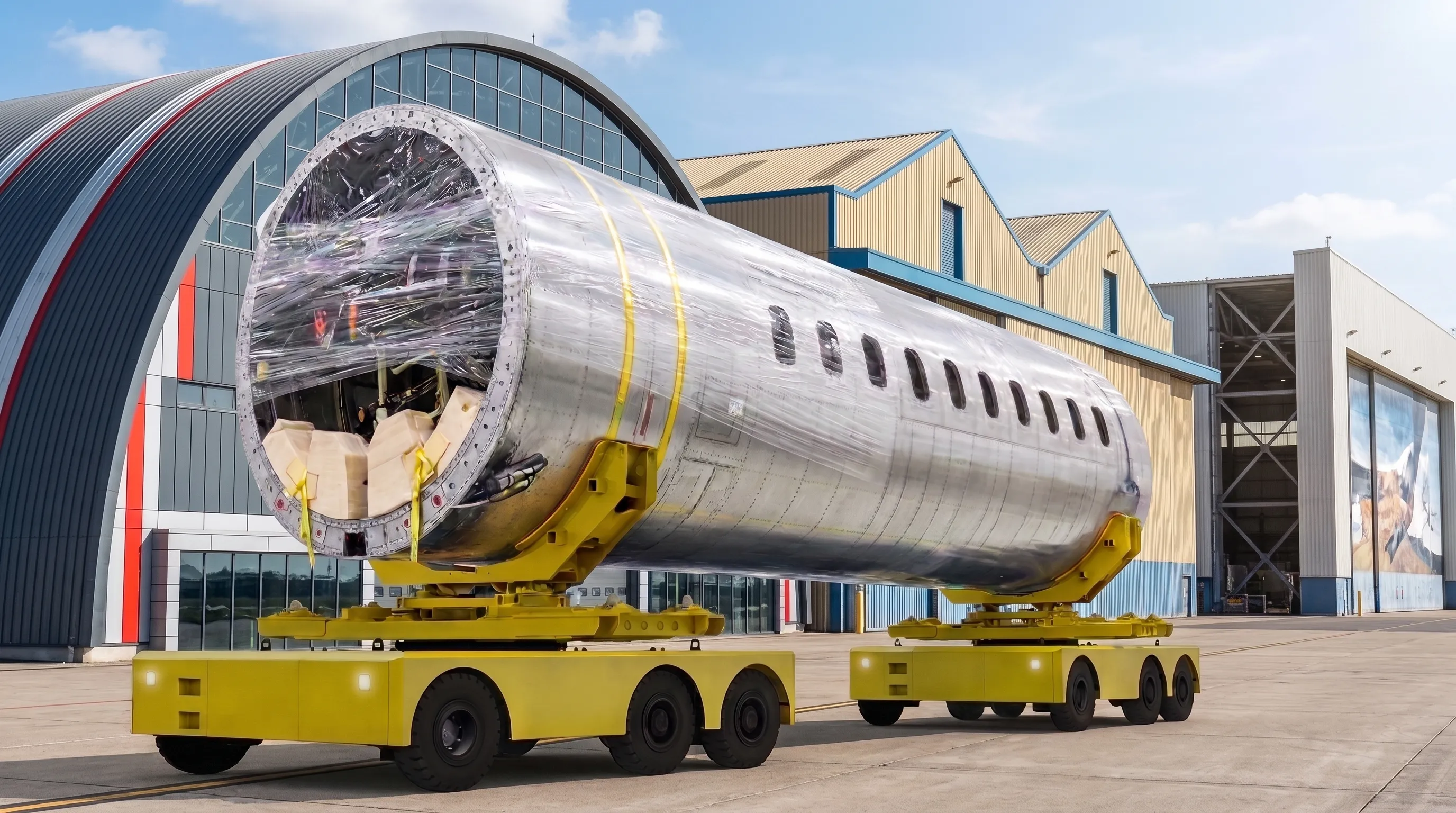
Two yellow remote controlled platform transporters carrying a wrapped aircraft fuselage section between them outside a hangar.

The machine

Remote controlled pair, one fuselage section

One section, two supports, and the length between them carried on nothing else. Where those two points sit is a stress question before it is a handling one.

CE marked100% electricRegenerative brakingRC or autonomousHeavy load360° on the spot

100% electric · autonomous or remote controlled · built to run

Powertrain, autonomy, robotics and operator, designed together.

YourTech

Our technology + yours, working wonders together.

Industrial operations are moving to electric, autonomous and unmanned systems. That shift cannot be bought in parts. We design, manufacture, integrate and operate those systems as a single engineering programme, from first specification to a fleet running in the field.

One roof
Software, robotics, manufacturing and fleet operation in one organisation.
ISO 9001 · 14001 · 45001
Standards held by the production environment that builds our systems.
EN 1090-2 EXC3
Structural fabrication and welding to EN ISO 3834-2 in the same facility.
Multiple sectors
One technology foundation, applied from agriculture to aerospace.

Manoeuvres

What the machine does, drawn at the size it happens.

Each of these is a geometry problem that decides how a site is laid out: what will turn where it stands, what gets round a corner that has no room to turn it, and what a pair can carry between them that one machine cannot.

Samples of our solutions

01 / 07

One platform, driving a circuit

There is nothing to steer. Every change of direction is a turn about its own centre, one side of wheels driven against the other, then straight on down the new axis.

The platform

One machine, and what it is made to do.

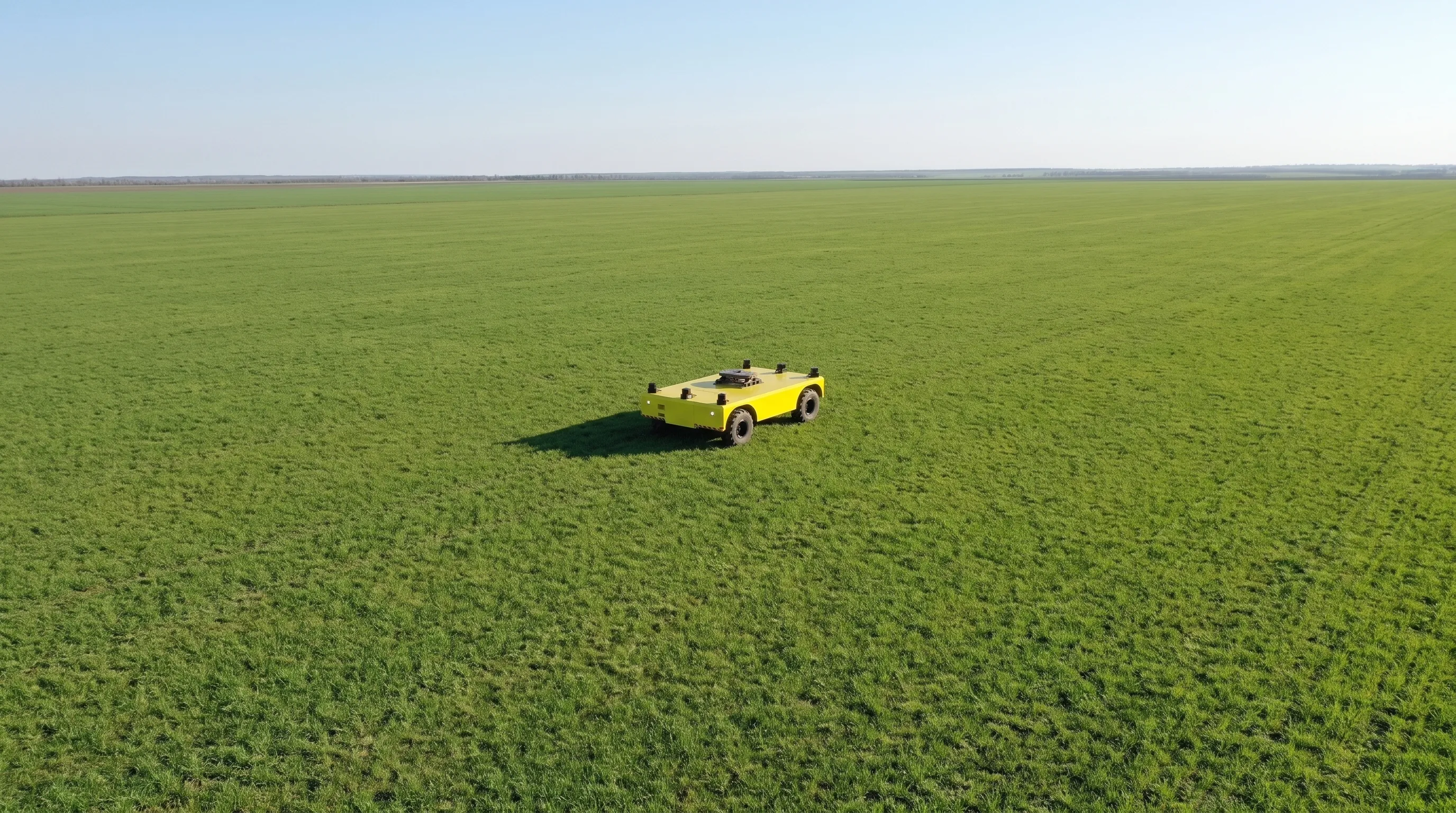
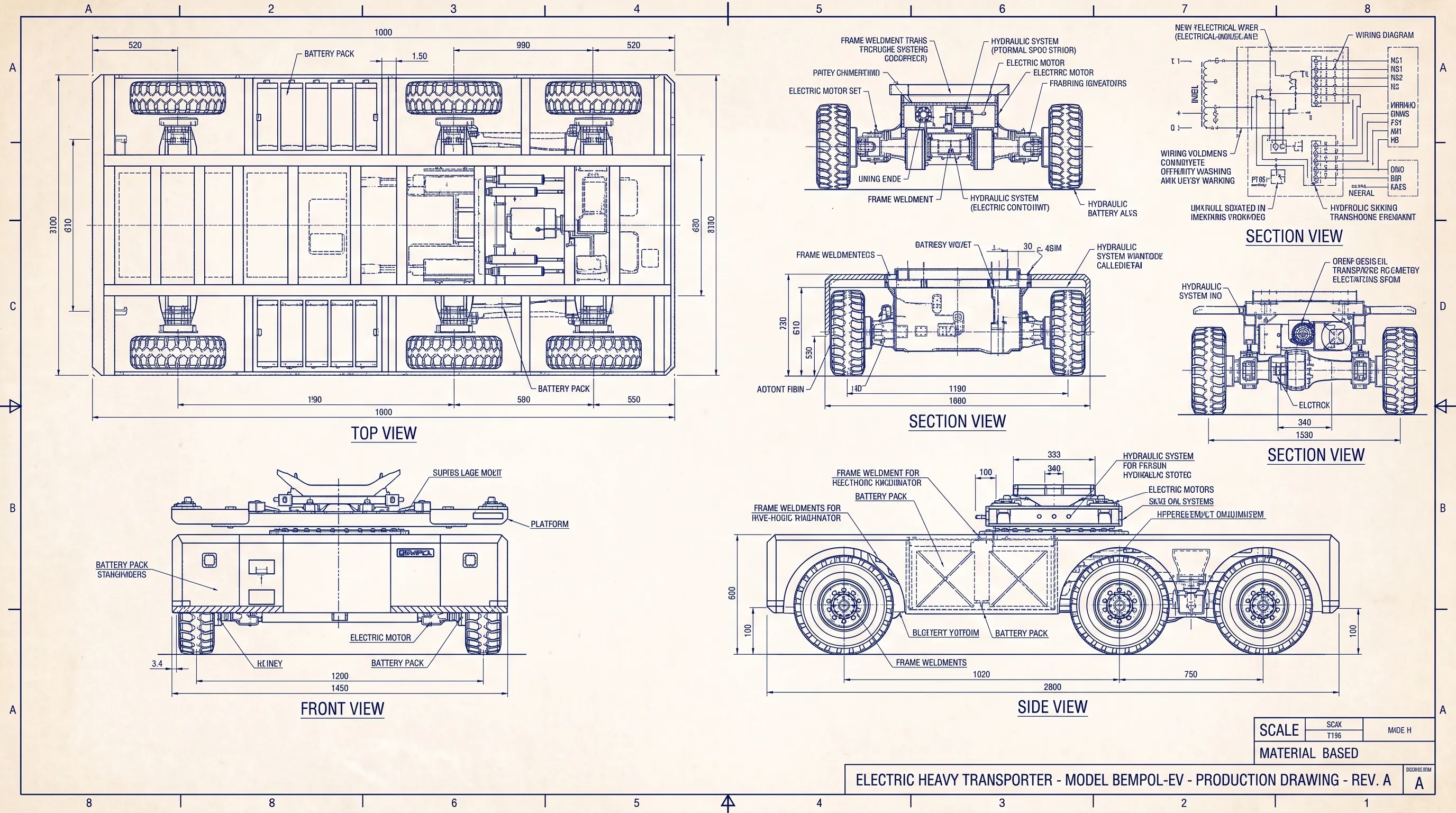
Everything above is a manoeuvre. This is the machine underneath them: what it carries, what it runs on, what it becomes when something is bolted to the deck, and what happens after it is delivered.

Payload

Built for heavy load

The deck is the machine. It is sized for heavy loads carried low and flat, singly or spread across more than one platform.

Attachments

Whatever is fitted decides what it is

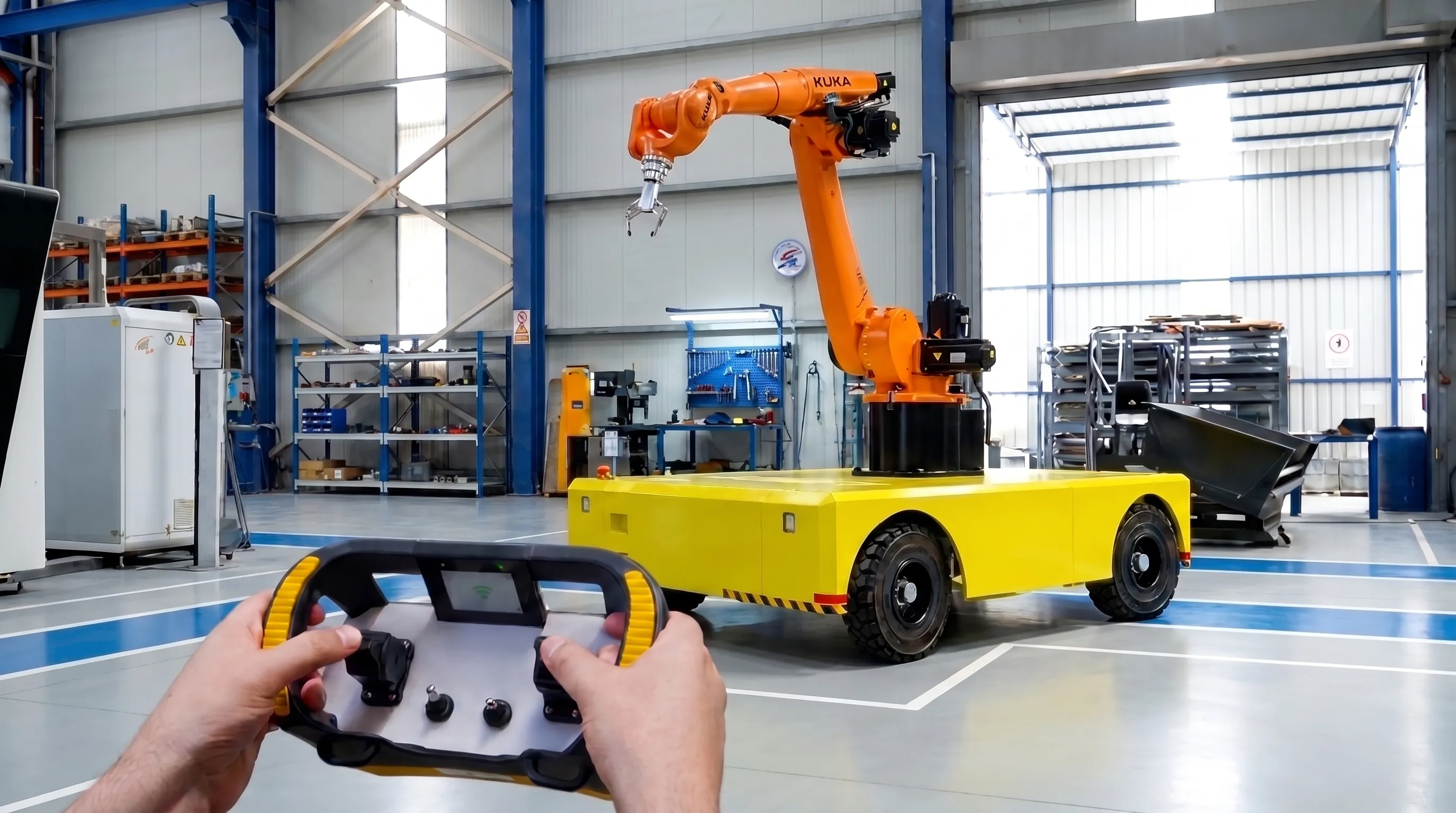
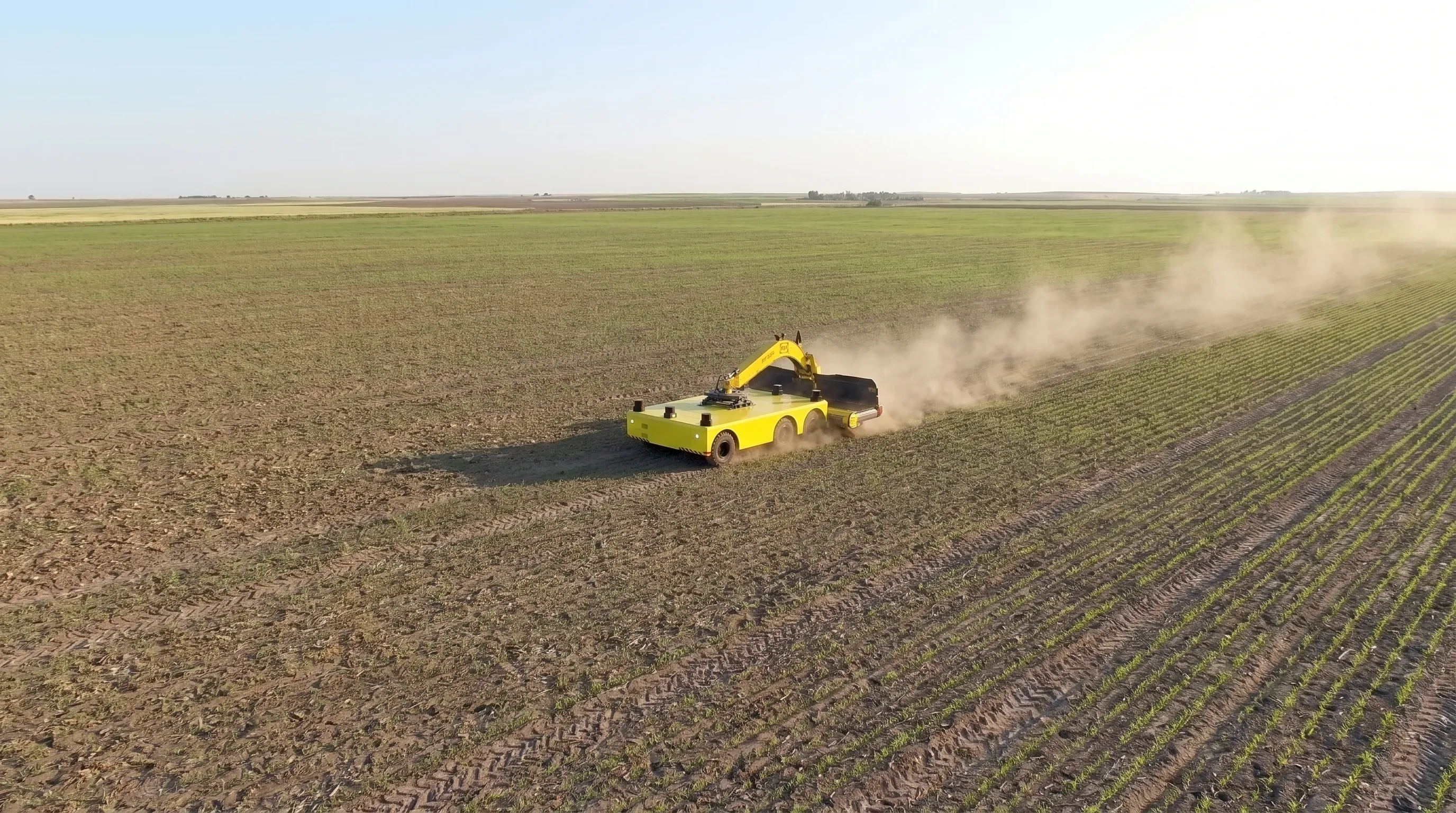
This is not a transporter with options. Put a different attachment on the deck and it becomes that machine. The platform underneath is the part that stays the same.

Drive

UK-made smart motors, braking back into the battery

No engine and no hydraulics inherited from one. The drive runs on smart motors made in the United Kingdom, and braking is regenerative, so energy spent climbing comes back on the way down instead of leaving as heat.

Ground

Broken ground and gradients, not only flat floors

Traction, weight distribution and the energy budget are designed together, because a machine that only works on a level slab is a machine tied to one building.

Coordination

Alone, in a pair, or as a fleet

One machine on its own job, two under a single load that neither could take, or a fleet working to one plan. The same platform, organised differently.

Application

Sector-agnostic by design

The platform does not know what industry it is in. What changes between a field, a hangar and a depot is the attachment and the programme around it, not the machine.

Support

Supported for the whole of its life

Spares, diagnostics, maintenance and technical support after handover, so a fault in year four is answered rather than waited out.

How we work

Platform, programme, fleet.

We do not start from a blank sheet for every customer, and we do not sell the same machine to everyone. A shared foundation is developed once, shaped into the system a sector actually needs, then supported for as long as it runs.

Platform

The foundation, developed once

Electric powertrain, autonomous and unmanned operation, robotics, and human-computer interaction design. It is hardened continuously, so every programme starts from proven engineering rather than a first attempt.

Programme

Shaped to one operating reality

Requirements analysis, design, manufacturing, integration and commissioning, carried by one engineering team from first specification to the day the system runs.

Fleet

Run, monitored and supported

A system is judged on the years after commissioning, not the day of it. Long-term service and maintenance keep duty cycle, availability and safety where the programme said they would be.

Capability

What we design, build, integrate and operate.

The capability list is deliberately wide, because an electric or unmanned system fails at the joins. We hold the joins ourselves.

Design

Design and engineering

Custom machine and system design, concept development and prototyping for requirements no catalogue product answers.

Autonomy

Autonomous system development

Designing autonomous and unmanned systems from the ground up.

Robotics

Robotics integration

Palletising and depalletising, welding cells and cabinets, cobot applications, machine tending, deburring and EOAT.

Simulation

Simulation and digital engineering

Cell and process simulation proves cycle time, reach and clearance before steel is cut.

Software

Cluster ERP and interfaces

Cluster ERP, our own modular enterprise software: eBOM, MRP, MES and the rest of the modules a production and project business runs on. Alongside it, human-computer interaction research and what it means for how a machine is designed to be supervised.

Service

Service and maintenance

Long-term technical support, maintenance and consultancy. The programme does not end at commissioning.

Enterprise software for project work

Cluster ERP

Cluster ERP is the software half of this company. It is a modular ERP built for businesses whose work is driven by projects and production rather than by stock movements alone, and we write it ourselves, which is why it can be shaped around how a business actually runs instead of the other way round.

What it covers

eBOM, MRP and MES sit at the centre of it, with the project, procurement, quality and commercial modules around them, on one data foundation. A production business can see the same order from the quotation to the shop floor to the invoice without reconciling three systems to find out where it is.

Modular means it is adopted in stages: start with the area causing the most pain, run it properly, then extend into the next without replacing what is already working.

Module areas

  • eBOM: the engineering bill of materials everything else is built from
  • Project and works order management
  • MRP: material requirements and production planning
  • MES: shop floor execution and tracking
  • Procurement, inventory and materials
  • Quality, traceability and documentation
  • Costing, commercial and reporting

The same company writes the software and builds the machines, so what the shop floor reports and what the machine actually did are answerable to each other.

Where we work

One foundation, multiple operating environments.

The same platform meets very different realities of duty cycle, terrain, regulation and risk.

Agriculture
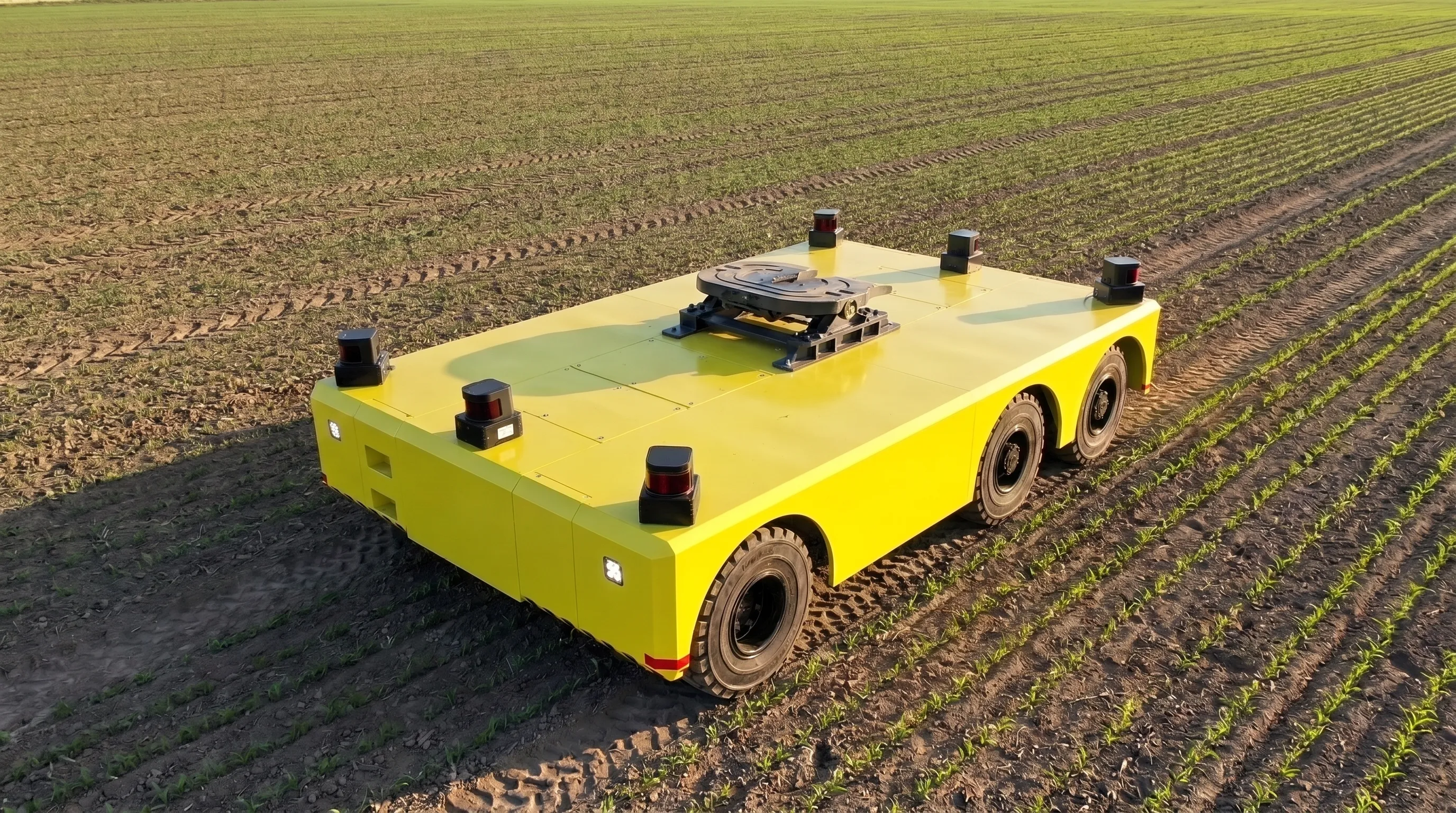
Electric and autonomous machinery for seasonal work in open, unstructured conditions.
Aerospace
Robotic cells and tooling built to the tolerance, traceability and process discipline the sector requires.
Ports and logistics
Electric and autonomous vehicle programmes for high-volume movement in mixed traffic.
Railways
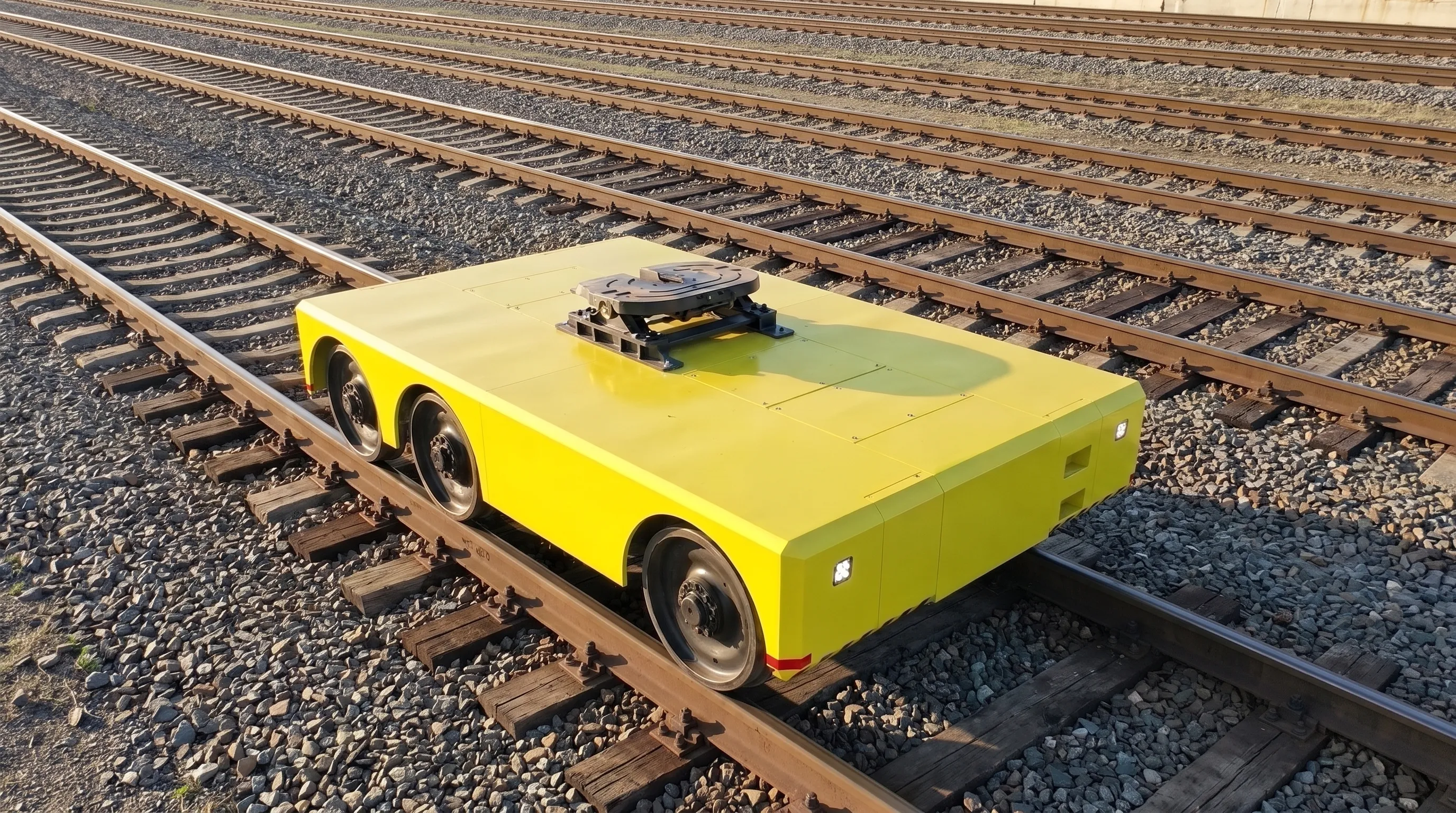
Vehicles, handling and fabrication for depot work, where access and time on the ground decide the cost.
Heavy industry
Robotics and automated systems built for heat, mass, abrasion and continuous duty.
General industrial manufacturing
Palletising, welding, machine tending and bespoke cells built around existing production lines.

Why Factorizer

Six reasons, and they are all the same reason.

Everything below follows from one thing: the machine, the software and the people who build both are in the same organisation. That is what a customer is actually buying.

One accountable roof

Software, robotics, manufacturing and service sit inside one organisation. When something has to change between the controls and the machine, that is an internal conversation rather than a commercial one.

The machines are our own

The platform, the electric powertrain, the autonomy and the operator interface are designed and built by us. Nothing is bought in and rebadged, and we are not converting a machine somebody else built.

Software is half of what we are

Cluster ERP is ours, eBOM, MRP and MES included, and so is the human-computer interaction work that decides whether a person can actually supervise the machine.

Made to recognised standards

Produced in an environment certified to ISO 9001, ISO 14001, ISO 45001, EN ISO 3834-2 and EN 1090-2 EXC3. Welded structure is held to the same discipline as the electronics.

One platform, every sector

The same foundation is shaped for agriculture, aerospace, ports, railways, heavy industry and general manufacturing. A sector does not pay again to solve what another sector has already solved.

Supported for its whole life

Spares, diagnostics, maintenance and technical support continue after handover, because a programme is judged on the years after commissioning rather than the day of it.

Robot choice follows the process. Reach, payload, cycle and the tooling at the end of the arm narrow the field long before a brand does, so we integrate whichever platform the work calls for.

Robot platforms

  • Fanuc
  • Yaskawa
  • ABB
  • KUKA
  • Nachi

Gripping and end-of-arm tooling

  • Piab
  • Schmalz
  • Schunk
  • Zimmer
  • PHD

Next step

Tell us what has to run, and how hard.

Bring us the operating condition: the load, the cycle, the site, the hours and the risk. We will tell you honestly what the electric and autonomous route looks like, what it takes to build, and what it takes to keep running.

Start a programme