Any load
Long, heavy and indivisible
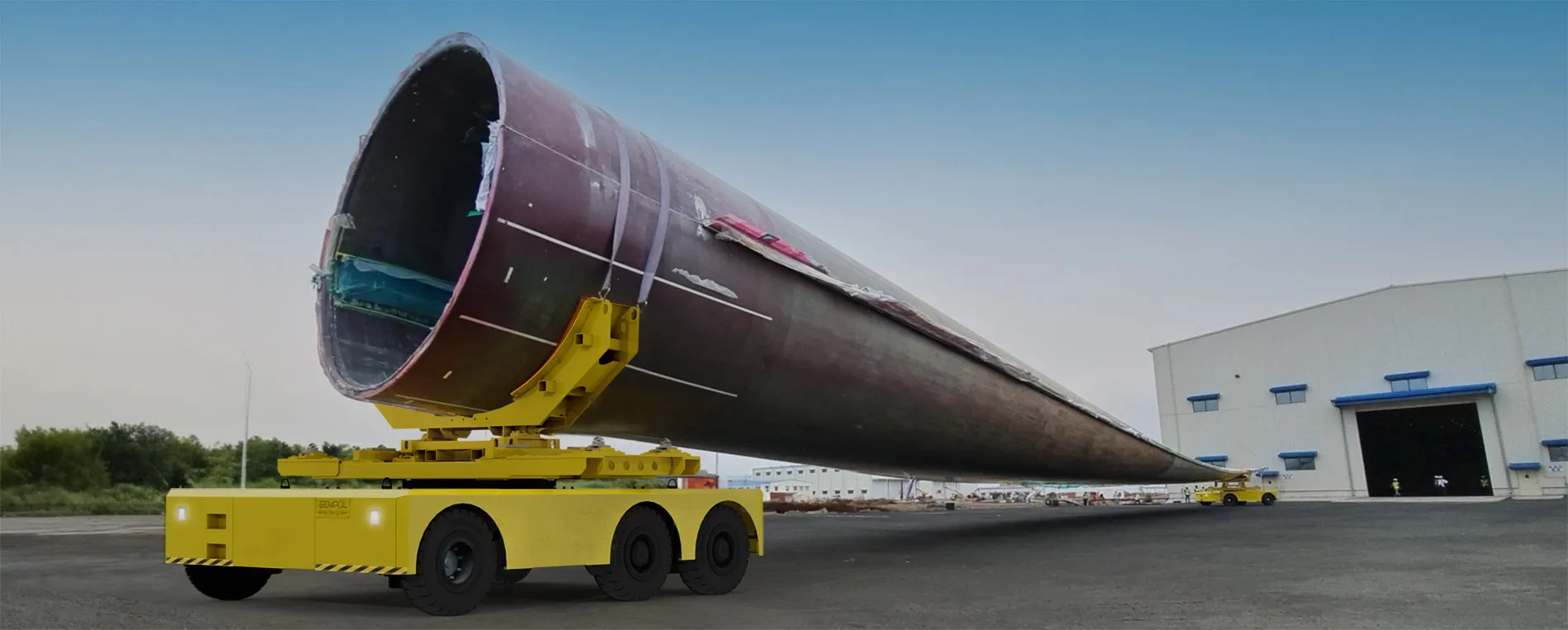
Rotor blades, fuselage sections, rail vehicles, steel structures: each held in a frame made for it.
 Real image
Electric Self-Propelled Transporters · AIL and Work Trucks
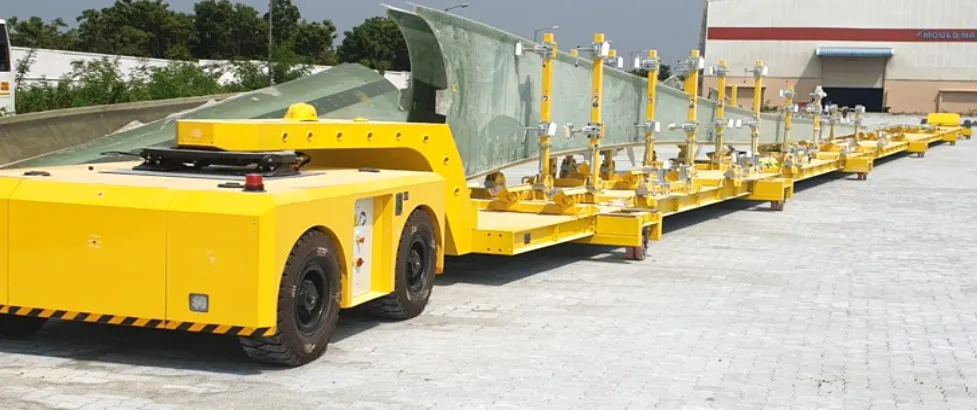
Remote-controlled or autonomous electric self-propelled transporters for long, heavy, single-piece loads, built to order and run singly or as a fleet. They carry whatever is fixed to the deck, or become the base for a machine. Those already working move rotor blades over 90 metres long, payloads of 40 tonnes and more, and long composite components between buildings.
56
In service today
Electric transfer trucks fully operating across five countries.
Sector-agnostic
The same platform serves a blade factory, a hangar, a rail yard or a field. What is fixed to the deck sets the job: a frame for the load, or a machine that works wherever the truck takes it.
Any load
Rotor blades, fuselage sections, rail vehicles, steel structures: each held in a frame made for it.
Any fixture
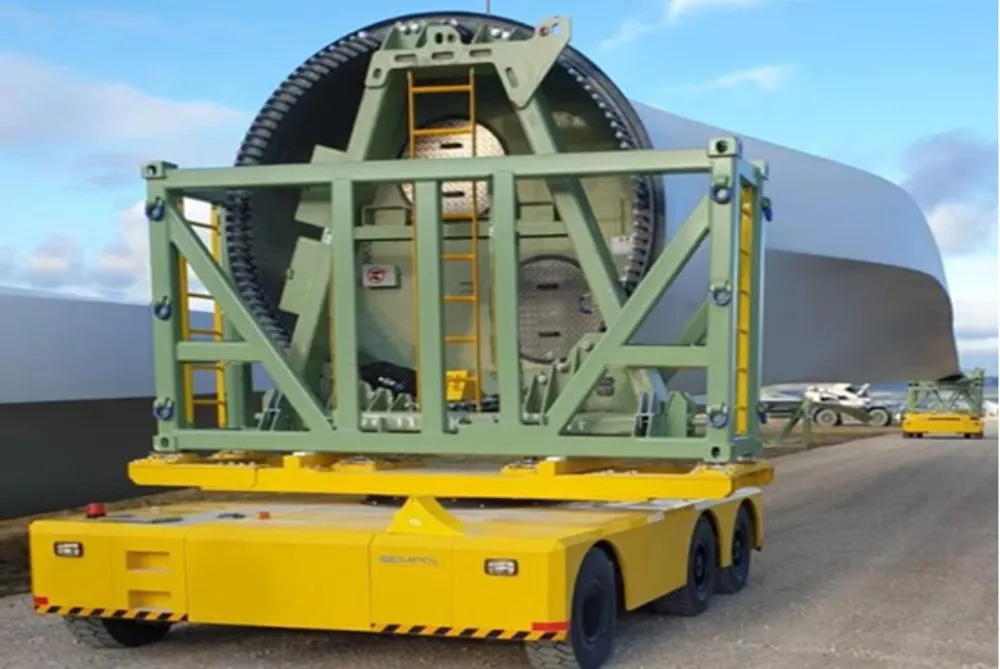
Frames, cradles and twistlock fittings designed for the load and locked to the deck.
Any machine
A robot arm, an implement or a process machine mounted on the deck and carried to where the work is.
Blade transfer trucks
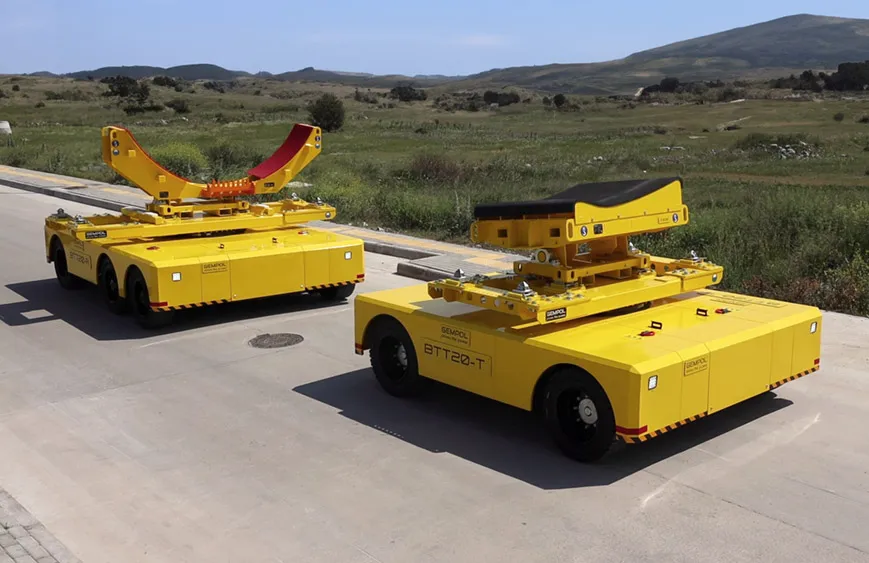
Two standard models for moving rotor blades through production, storage and the yard. The BTT20 is the new generation, built for the largest onshore blades. Anything larger or different is built to order.
 Real image
What is new in the BTT20
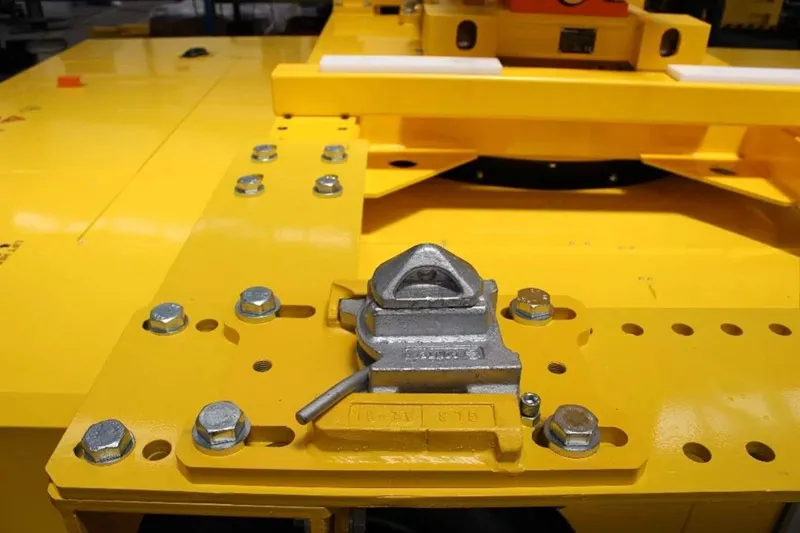
Load securing
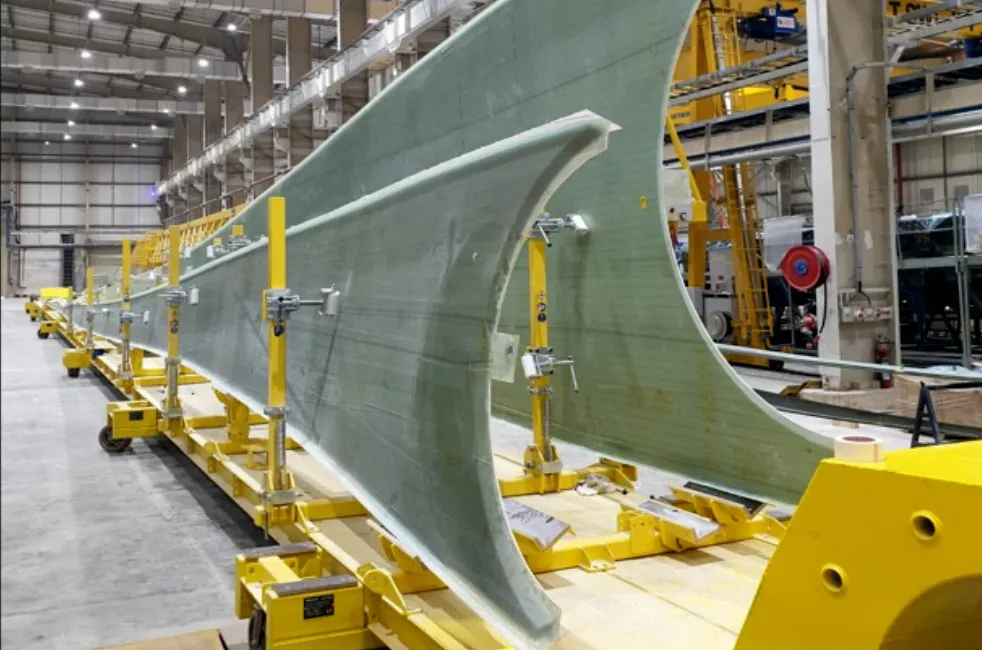
The blade travels in a frame locked to the deck through twistlocks, the same fittings that hold a shipping container in place.
 Real image
 Real image
Fixing
Twistlock fixing that adjusts to the frame, so one truck can take different blade sizes.
Fixing
Twistlock fixing designed around a specific blade and its frame.
Parking
Stands for parking the truck. They are for the unloaded condition only.
Long component transfer
Shear webs and CABS (composite airfoil blade support profiles) are long and delicate, and need precise handling. The long component transfer system carries them from one building to the next on wagons made for the component, fitting smoothly into the production line.
 Real image
 Real image
Operation
Every truck starts from the same electric platform and grows with the operation. It can begin as one remote-controlled machine and become a fleet of autonomous trucks working together, with capacity and range extended as the work demands.
 Real image
Battery powered throughout, with zero exhaust emissions inside the facility or out in the yard. Regenerative braking returns energy to the battery every time the truck slows.
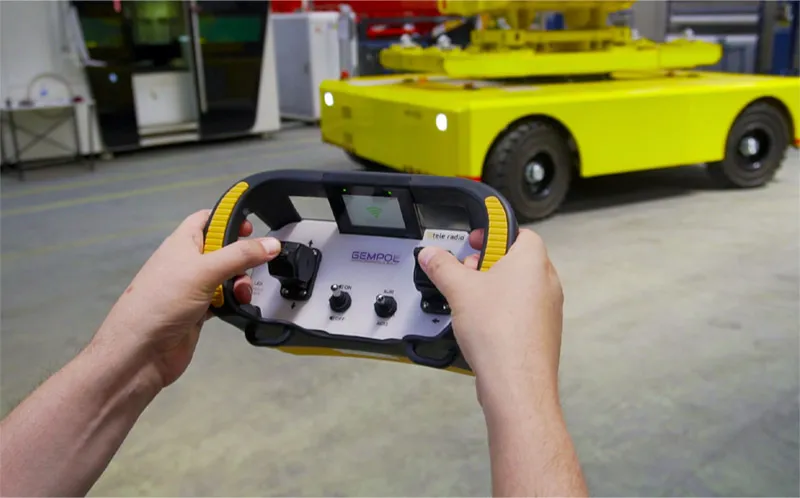
Driven from a purpose-designed remote, with the operator standing where the clearances are, or built to run autonomously. Either way the load moves with precision, even in confined spaces.
Several trucks work to one plan. They share a single long load between them, or each covers its own route across the site.
Payload capacity, battery capacity and operating time, size and features can all be extended. Each is developed with the people who will run the trucks.
Product film
Manoeuvres
Each of these is a geometry problem that shapes how a site is laid out. Turning on the spot, rounding a tight corner, and two trucks carrying one load between them.
Samples of our solutions
01 / 07
One platform, driving a circuit
More applications
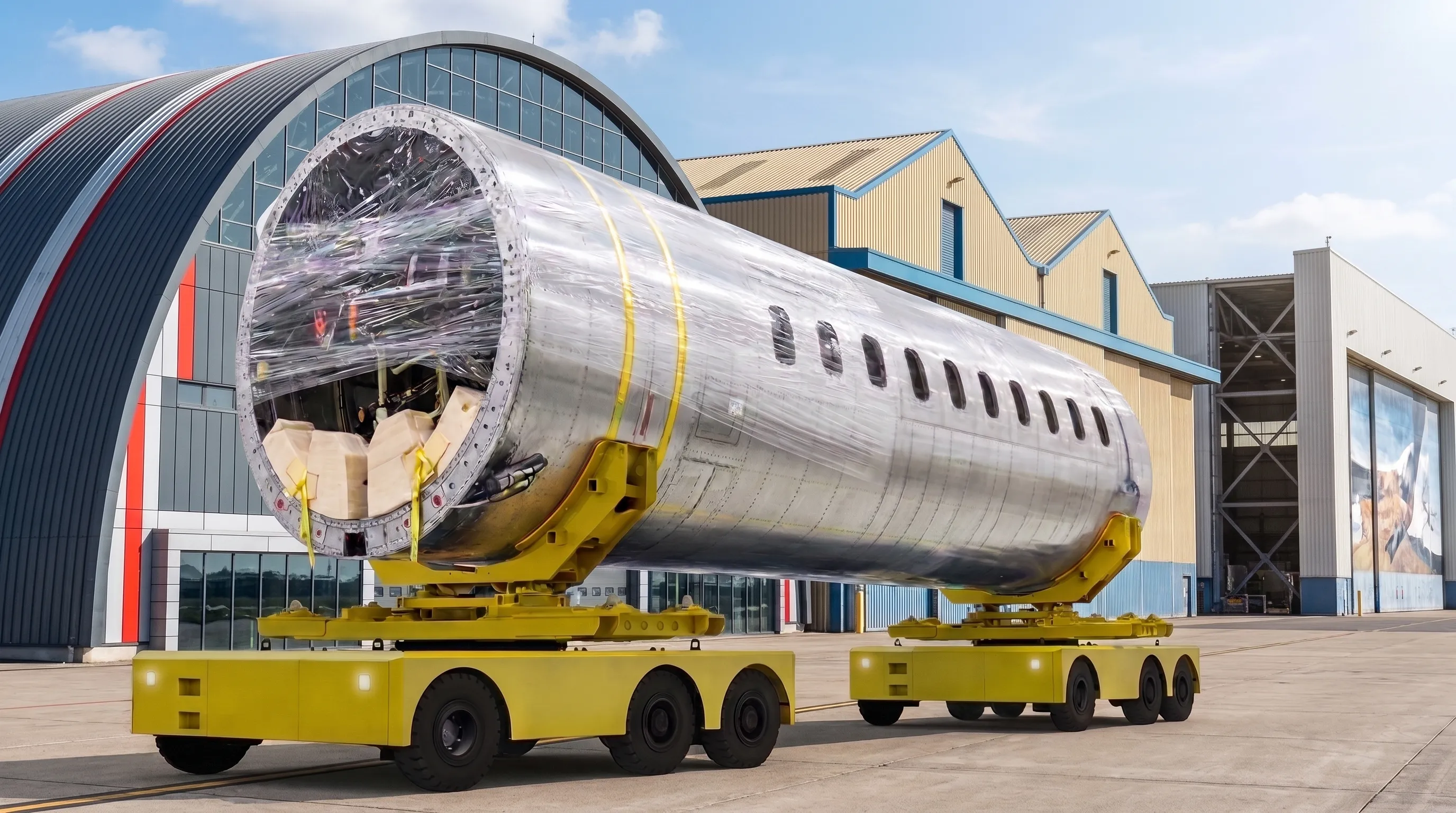
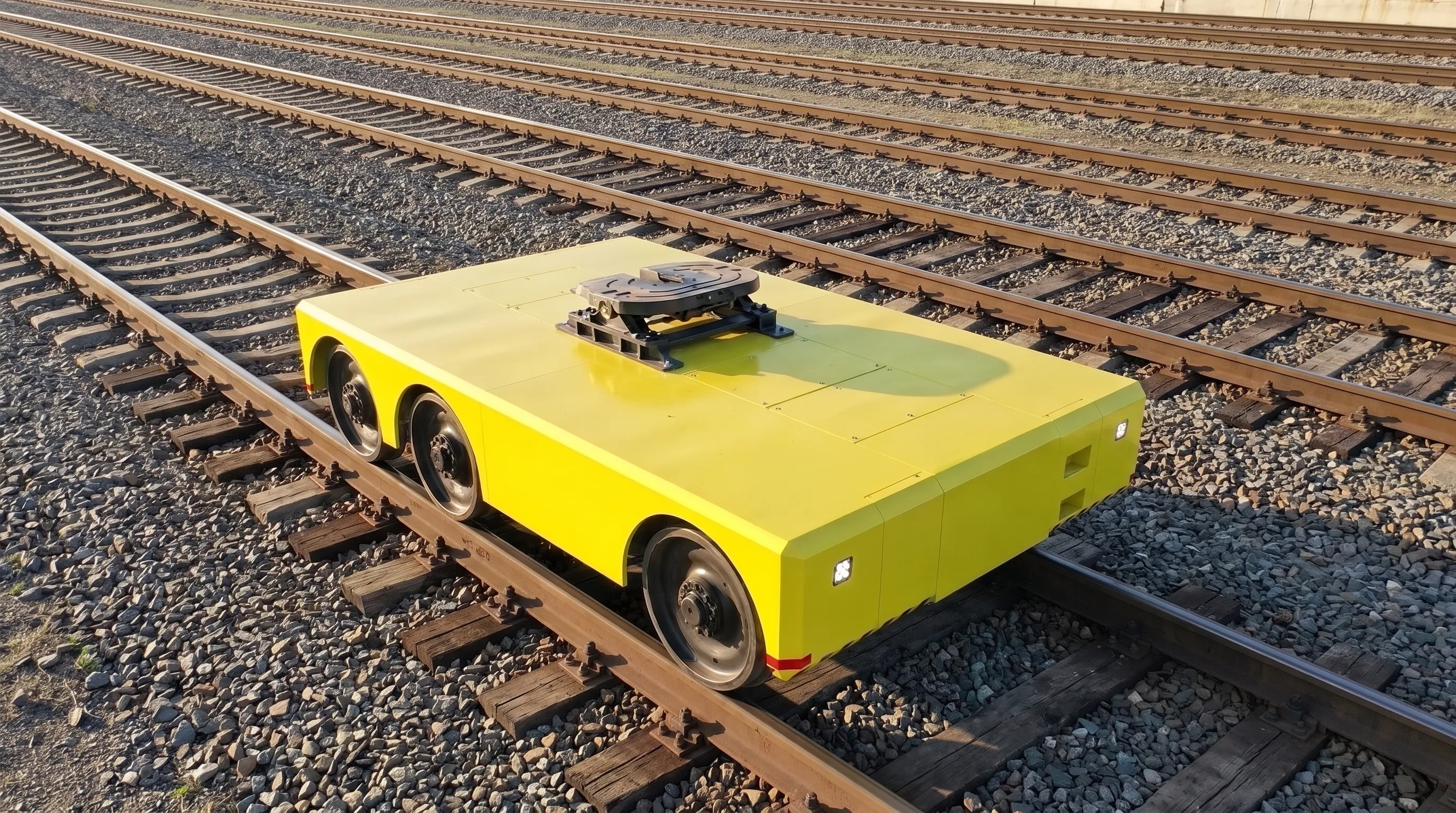
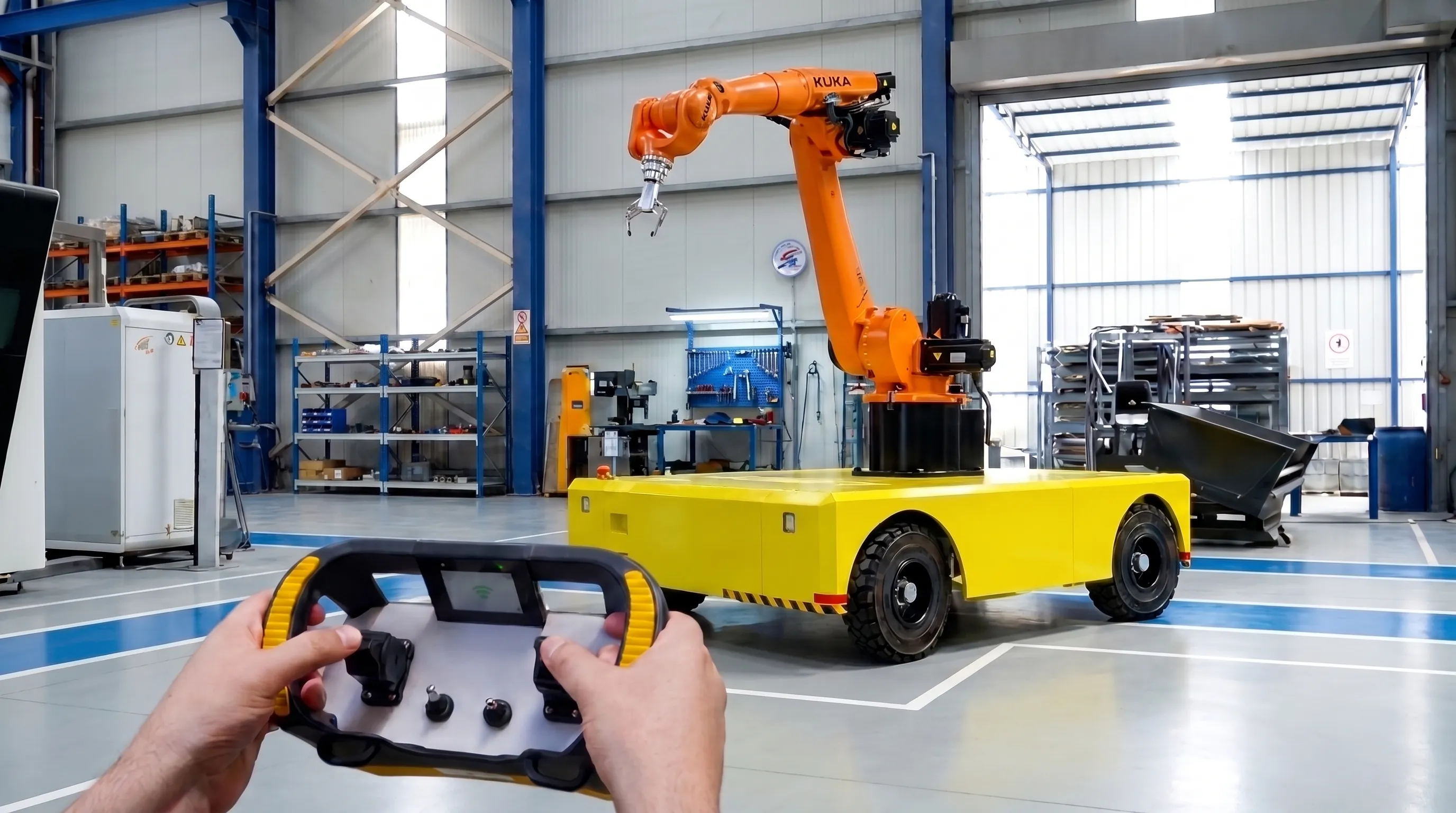
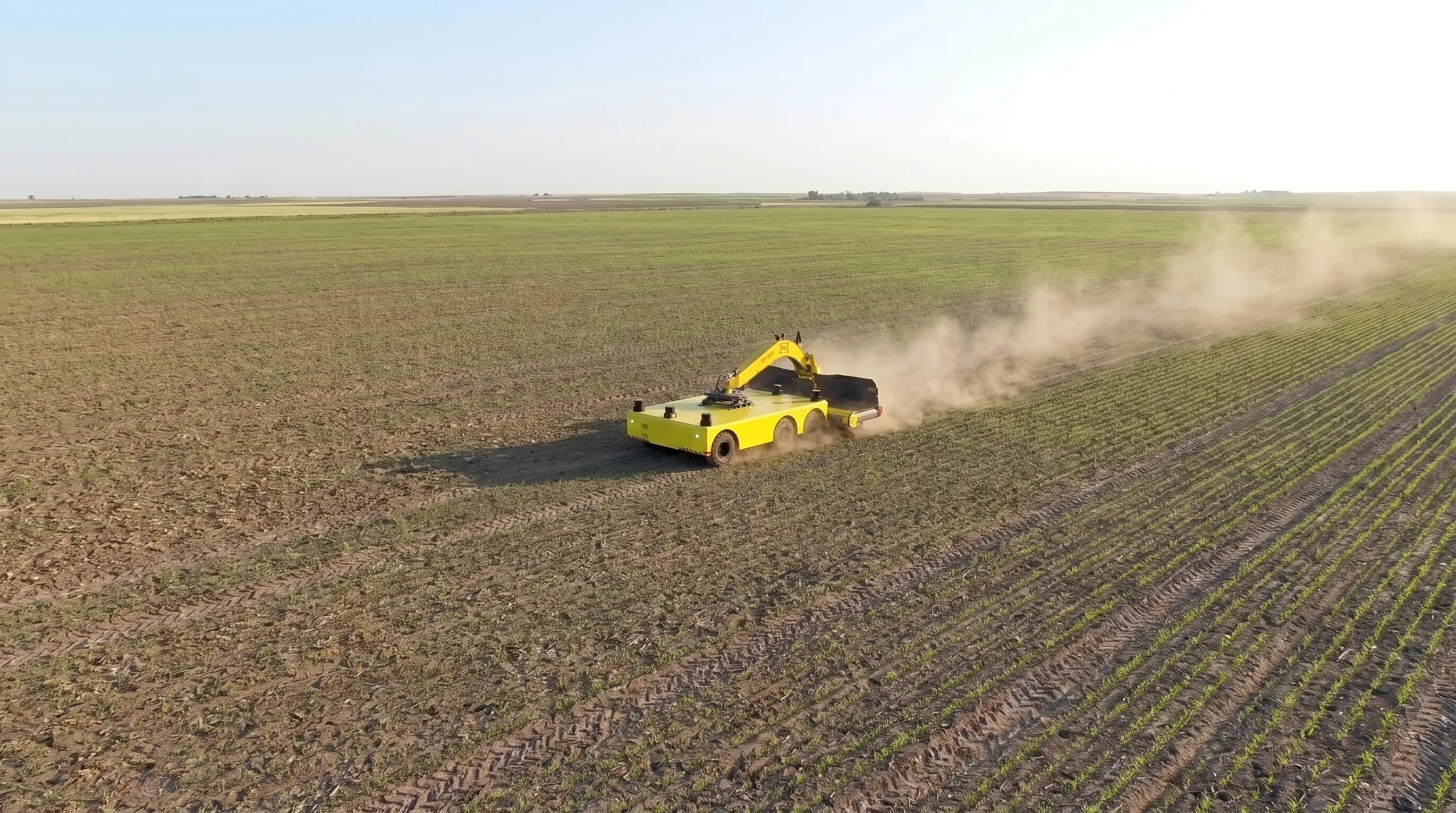
Each of these can be built on the same electric platform. A pair under an aircraft fuselage, a deck on rail, a robot arm carried to the job, an implement working a field. Tell us the application and we will build the truck around it.
 Illustration
Aerospace
A remote-controlled pair carrying one fuselage section.
 Illustration
Rail
A platform built to run on track, in the yard.
 Illustration
Combined with a machine
A robot arm on the deck, driven to the work.
 Illustration
Agriculture
An implement fitted, working the field.
Representative illustrations of possible applications.
Next step
Its length and weight, the route between buildings and how often it has to run. Every truck is built to order, so the load sets the size.
Solutions