Onshore and Offshore Wind Solutions · Tools and Custom Machines
Tools and custom machines for heavy and bulky components, onshore and offshore.
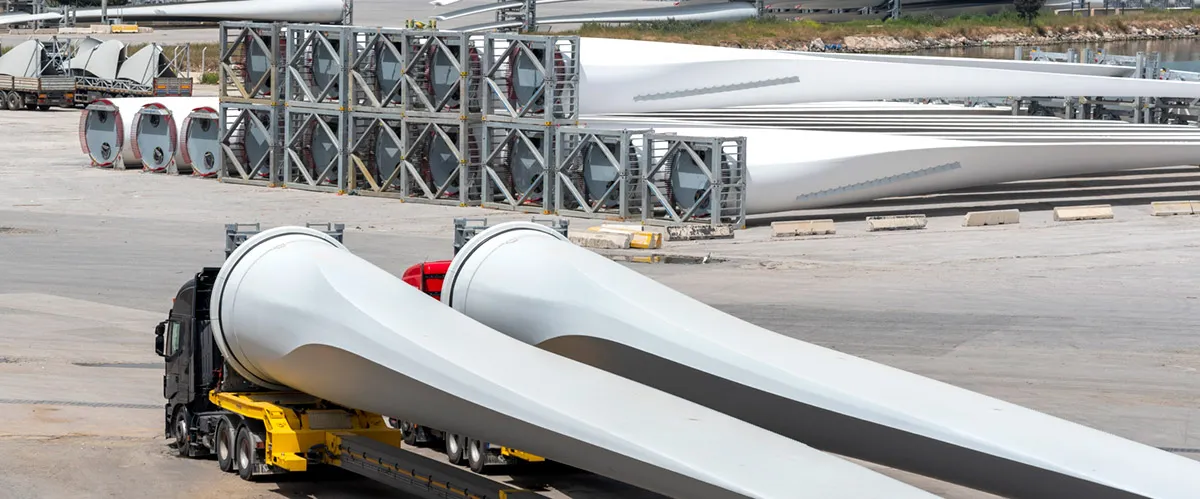
Transport frames that carry a component from the hall to the installation site, by road or by sea. Stands and storage tools shaped to the part. A turning device that rotates a rotor blade along the line, and a heater that cures its root. Each is designed and built to the component and the process.
 Real image
- Onshore and offshore
- Transport frames rated for the road, the yard and marine transport.
- Steel and aluminium
- Hot and cold rolled profiles; liquid coating, hot-dip galvanising or metallising.
- 45 t
- Combined capacity of the root and tip units of the rotor blade turning device.
- 6300 m³/h
- Air flow of the blade root curing heater, adjustable from 0 to 100 °C.
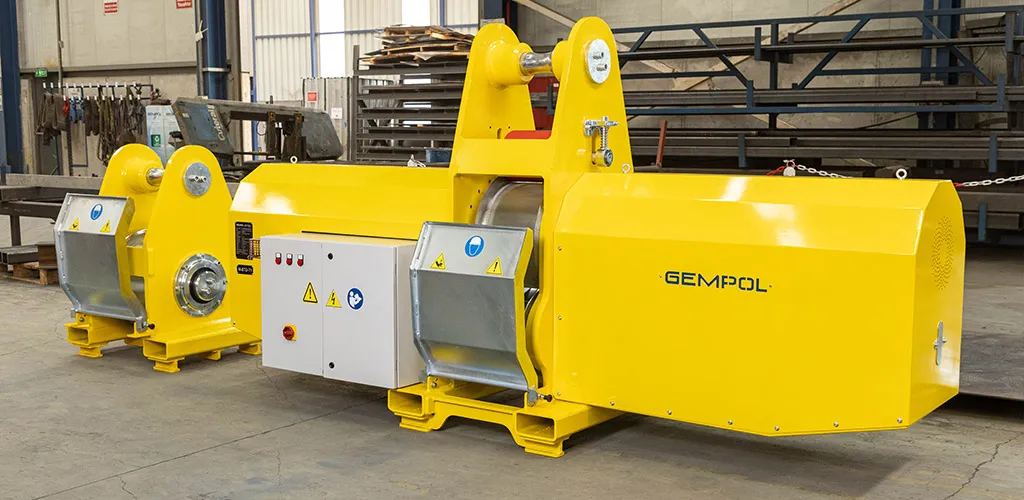
Rotor blade turning device
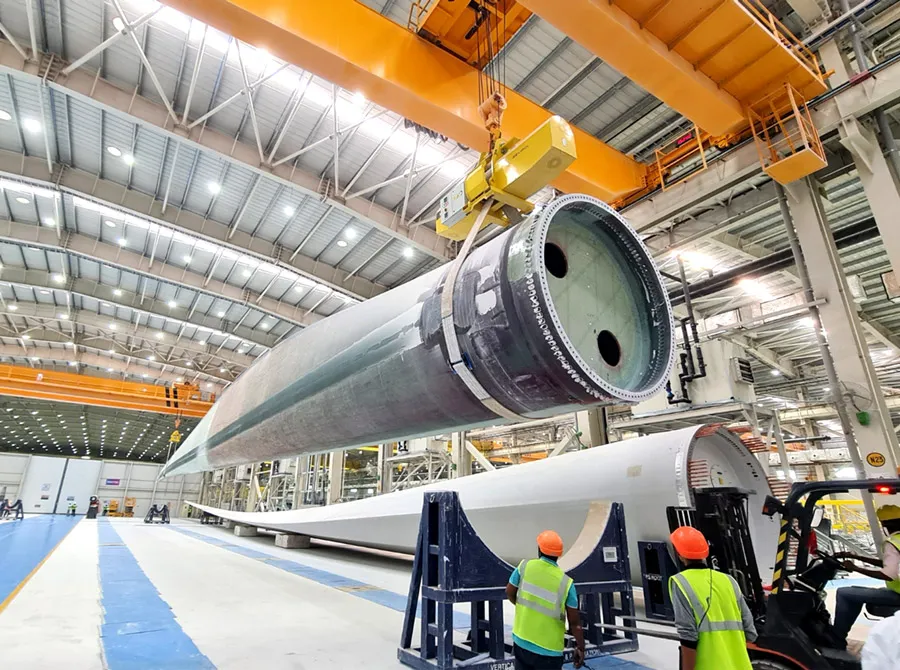
Turns a rotor blade on the line, under the standard crane.
Rotating a large, delicate blade during production calls for exact control. The turning device does it in two coordinated units. A root unit carries the drive, for balanced and safe rotation. A tip unit supports the blade and keeps it guided throughout.
 Real image
 Real image
- Moves and turns rotor blades along the production hall
- Root and tip units with a combined capacity of 45 t
- Operates under the standard overhead crane
- Remote steering
- Drum design for safer rotation
- Automatic balance available, with sensor control and a counterweight system
Transport, installation and service tools
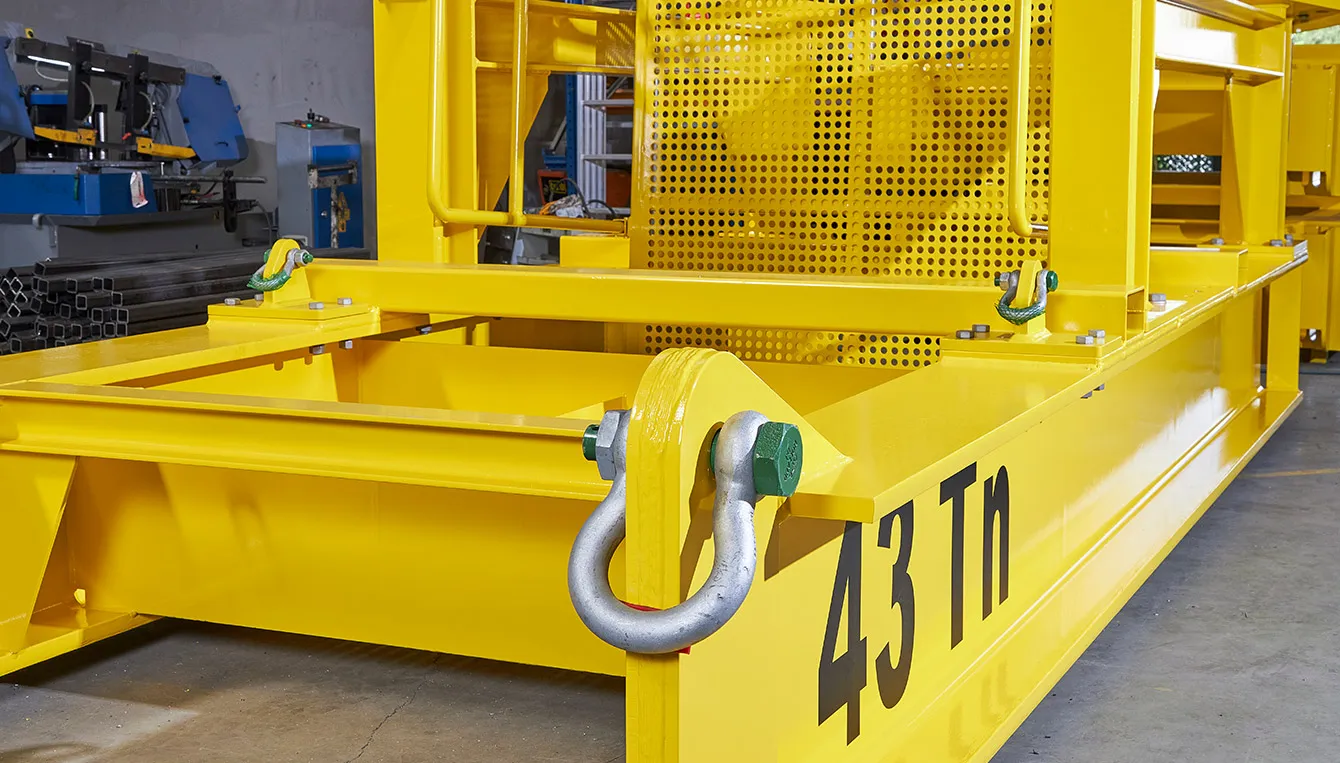
Frames that carry the component from the hall to the site.
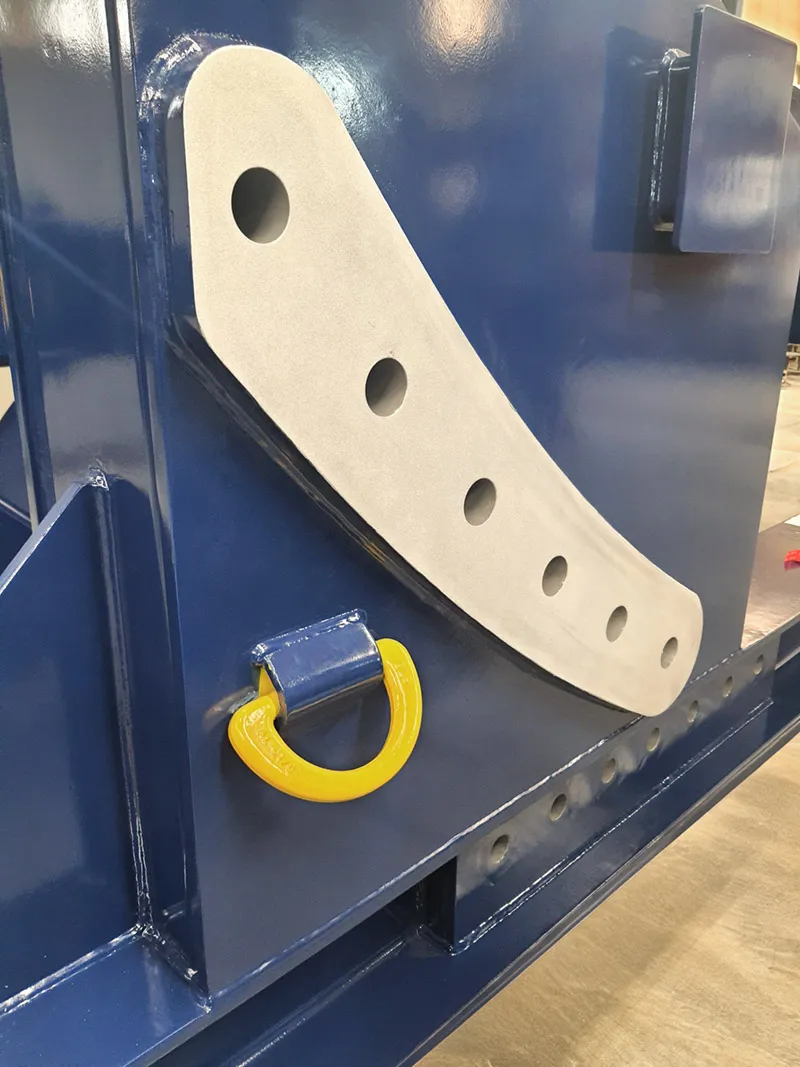
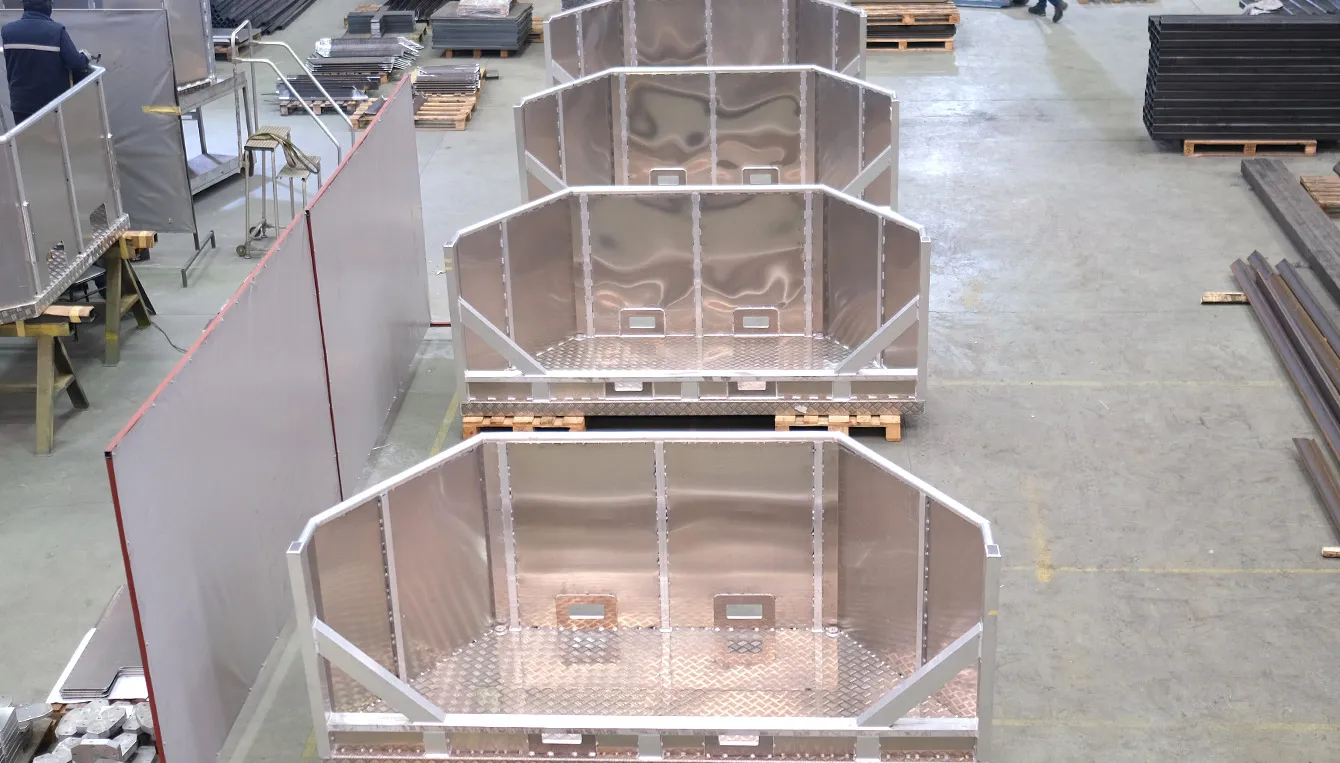
Large components such as rotor blades, nacelles, hubs, generators and towers travel on purpose-built transport, installation and service tools. They are designed for safe, efficient movement inside the production facility and onward to the installation site, on land or at sea.
- Available for both onshore and offshore transport
- Steel or aluminium structures, to the component and the route
- Hot and cold rolled profiles of certified quality
- First-class transport dampers, load rings and connection parts
- Liquid coating, hot-dip galvanising or metallising
- Produced within tight tolerances
 Real image
 Real image
 Real image
Production and storage tools
Stands, cradles and storage tools shaped to the part.
Between the stations of a line and in the yard, a component rests on tools made for it. Stands, cradles and storage frames, with adjustable supports and premium pads where they meet the surface.
- Custom design for the component and the line
- Structures fabricated to drawing
- Height and width adjustable
- Premium pads at every contact point
- Hot-dip galvanised or liquid coated
Blade root curing heater
Controlled curing at the blade root.
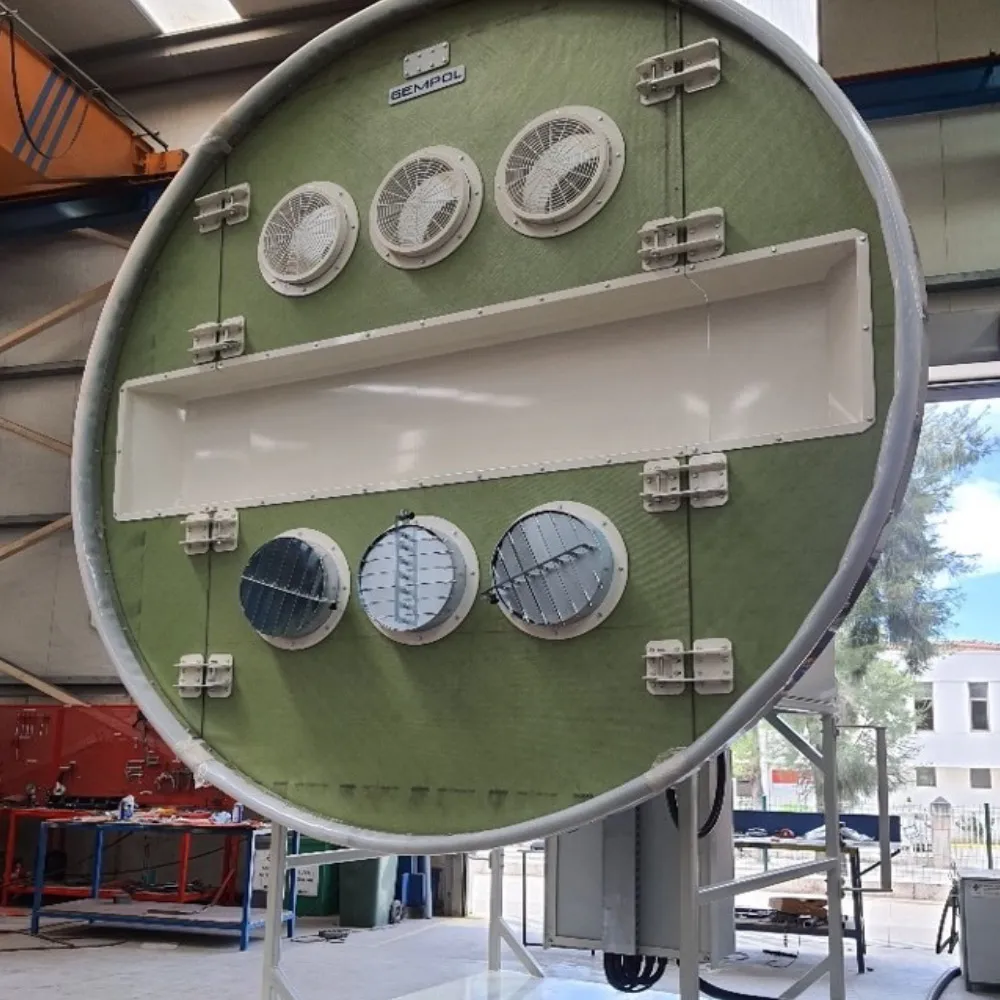
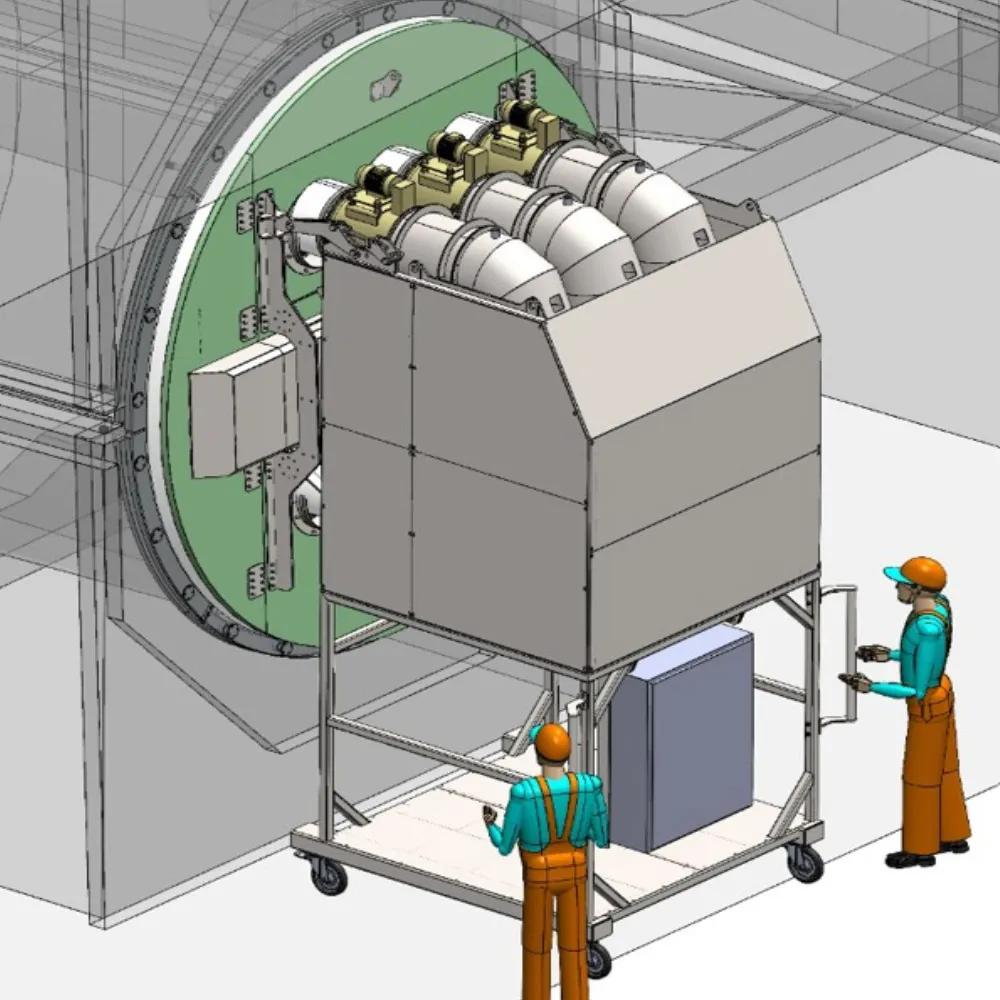
Resin at the blade root cures under controlled temperature and air flow, for structural durability and consistent quality. The heater docks to the root, holds the heat with its insulation and silicone sealing, and folds for transport between lines and sites.
- Adjustable air flow, 6300 m³/h in total
- Adjustable temperature, 0 to 100 °C
- Silicone sealing for maximum efficiency
- Insulated to hold the heat where it is needed
- Foldable for transport and quick setup on site
 Real image
 Design render
Alongside
The transporters and the fabrication behind the tools.
- Equipment
Electric Self-Propelled Transporters
Remote-controlled transporters for heavy and bulky loads between buildings and across the yard. Built to order, run singly or as a fleet.
- Fabrication
Contract Steel Fabrication
Frames, cradles and support structures fabricated to drawing. Made in a production environment certified to EN 1090-2 EXC3 and EN ISO 3834-2.
Next step
Tell us about the component and the route.
Dimensions and weight, the stations it passes, the route from the hall to the site, and the schedule. We will come back with a proposal.
Solutions